.svg)
View all articles
Student behavior
College students' beliefs about health and wellness were profoundly shaped by the pandemic. Now, as this generation enters college, they’re consciously prioritizing physical and mental wellbeing.
August 25, 2025
Lorem ipsum dolor sit amet, consectetur adipiscing elit. Suspendisse varius enim in eros elementum tristique. Duis cursus, mi quis viverra ornare, eros dolor interdum nulla, ut commodo diam libero vitae erat. Aenean faucibus nibh et justo cursus id rutrum lorem imperdiet. Nunc ut sem vitae risus tristique posuere.

College students' beliefs about health and wellness were profoundly shaped by the pandemic. As teens, they endured years of isolation, physical separation from their peers, and spiking rates of anxiety and depression, often with little support from overtaxed institutions and family members. Now, as this generation enters college, they’re consciously prioritizing physical and mental wellbeing.
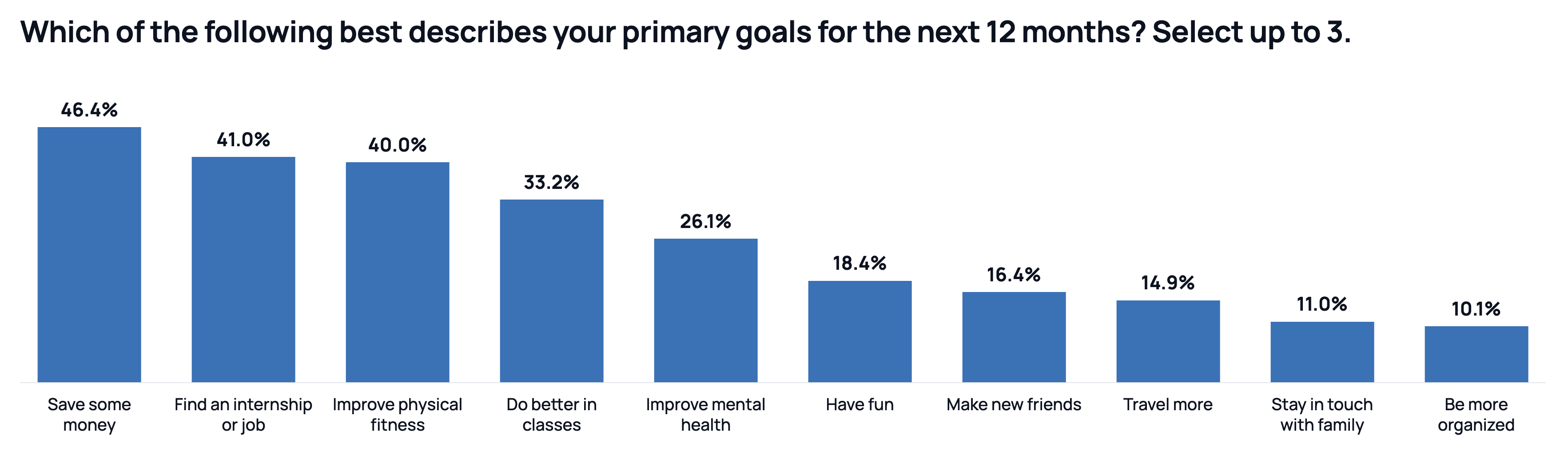
Our research indicates that students are actively pursuing their physical and mental health. When asked about their biggest priorities for the year ahead, students ranked improving both physical fitness and mental health among their top five goals, with 40% citing physical fitness specifically—surpassed only by saving money and finding a job or internship.
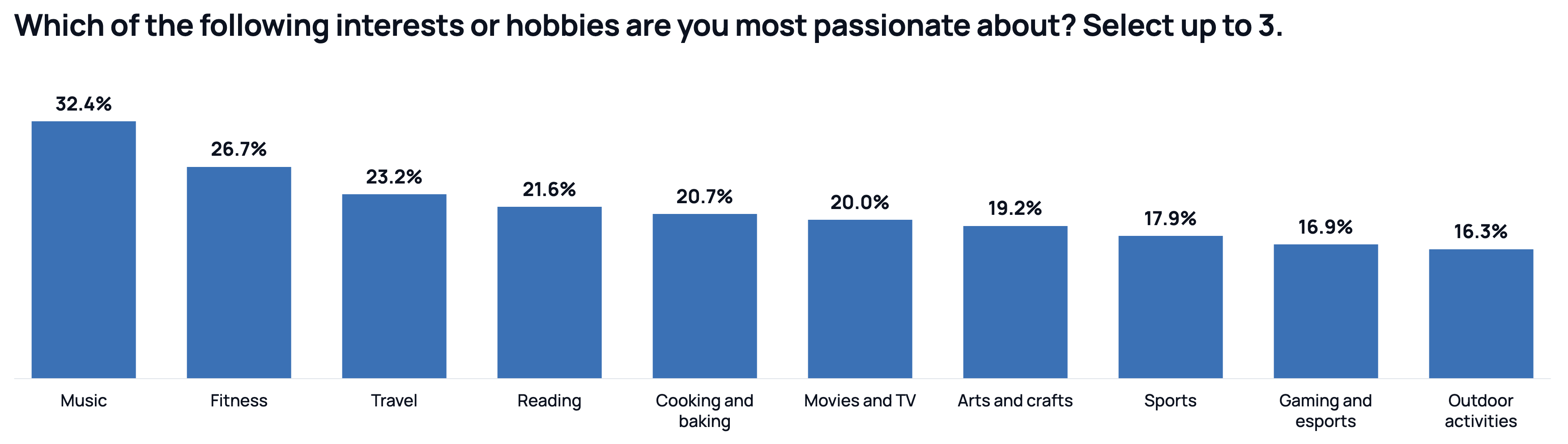
In the close-knit environment of a college campus, wellness becomes a social pursuit. A 2023 survey by the College Student Mental Wellness Advocacy Coalition found that 90% of students turn to friends for mental health information, with 40% doing so regularly. Additionally, 67% of students reported socializing with friends as a primary method to manage stress. flytedesk research supports these findings, revealing that 27% of students consider fitness to be a passionate hobby, more than every other category except music. These priorities reflect a generation that sees health as essential to success and belonging.
In February 2025, we conducted a national survey to broadly assess college students’ sentiments. The survey received 1,803 complete responses from students across 29 states and 67 universities. Responses were analyzed to identify key trends, habits, and attitudes around physical and mental health and wellbeing.
The key lesson for brands is to show up with real care. Students can tell when a brand truly supports their well-being, and they reward it with trust and loyalty. Brands that lead with wellness-first messaging and deliver products that genuinely help students feel healthier, more balanced, and more confident will find an audience that’s eager to engage and ready to grow with them.

On this page
Headings

.avif)

%202.svg)