.svg)
View all articles
Politics
A multi-channel campus media program across seven battleground states drove a 12-point increase in on-campus voter registration and a 7-point increase in reported turnout among exposed students.
Analysis and data collection conducted by Pantheon Analytics + flytedesk. Program partner: NextGen America.
July 14, 2026
Lorem ipsum dolor sit amet, consectetur adipiscing elit. Suspendisse varius enim in eros elementum tristique. Duis cursus, mi quis viverra ornare, eros dolor interdum nulla, ut commodo diam libero vitae erat. Aenean faucibus nibh et justo cursus id rutrum lorem imperdiet. Nunc ut sem vitae risus tristique posuere.
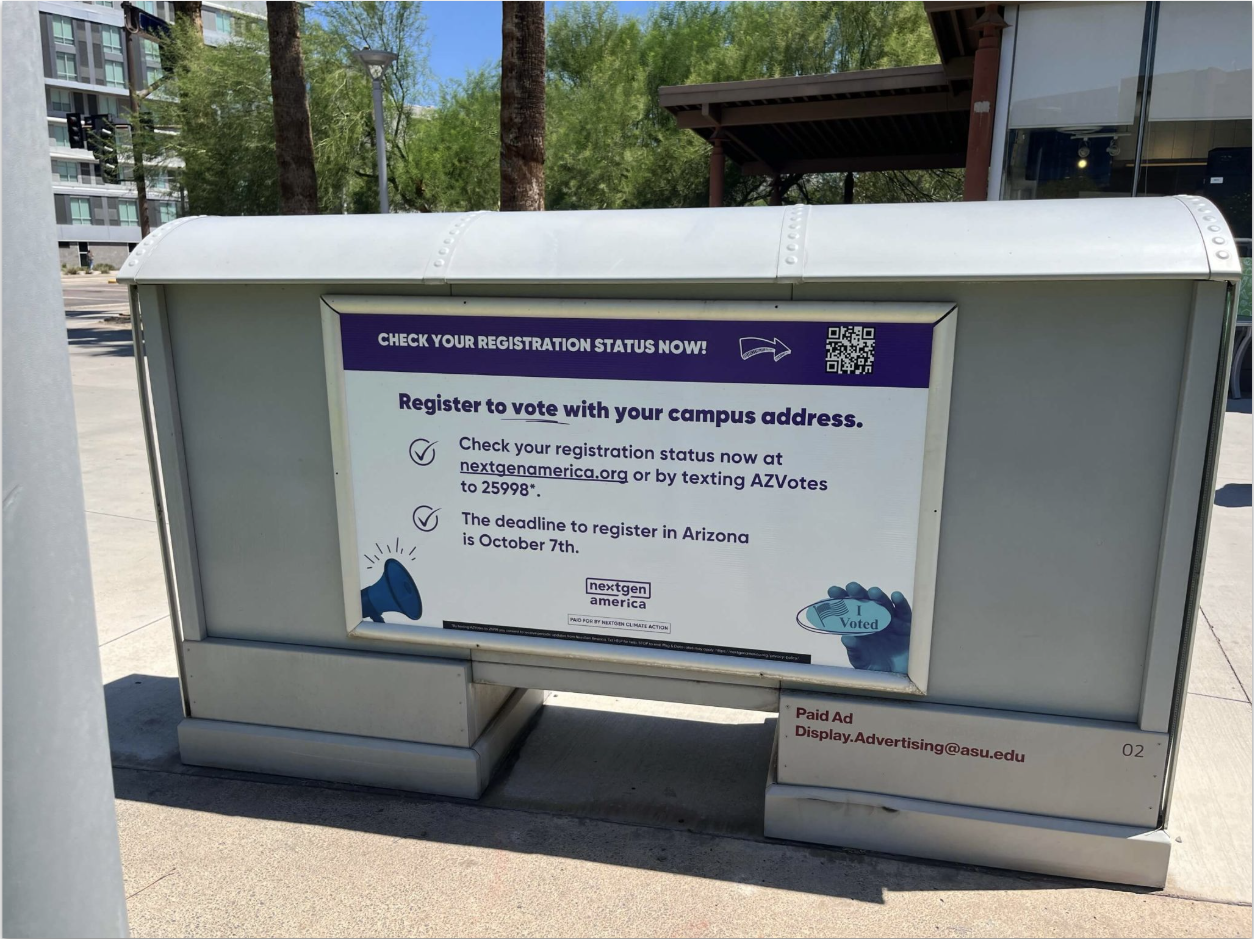
A campus media program run in partnership with NextGen America during the 2024 general election cycle tested whether omnichannel on-campus messaging could shift voter registration behavior among college students to increase registration using their campus address rather than their home address.
Surveys conducted before, during, and after the campaign measured registration location, knowledge of campus voting eligibility, likelihood to vote, and post-election behavior among students at exposed and control campuses. Across all measured outcomes, exposed students outperformed their peers at control schools.
The central finding: students exposed to high volumes of campus media were 12pp more likely to register at their campus address and 7pp more likely to report voting.
A 2022 voter file analysis by flytedesk and Pantheon Analytics found that out-of-state students who registered in their campus state turned out at a rate 37 percentage points higher than those who registered at home, but only 8% chose to do so. The 2024 program was designed to close that gap.
flytedesk partnered with NextGen America to blanket campuses in battleground states with omnichannel messaging informing students that they were eligible to vote using their campus address and that doing so meant their vote would count in a place where it was more likely to matter.
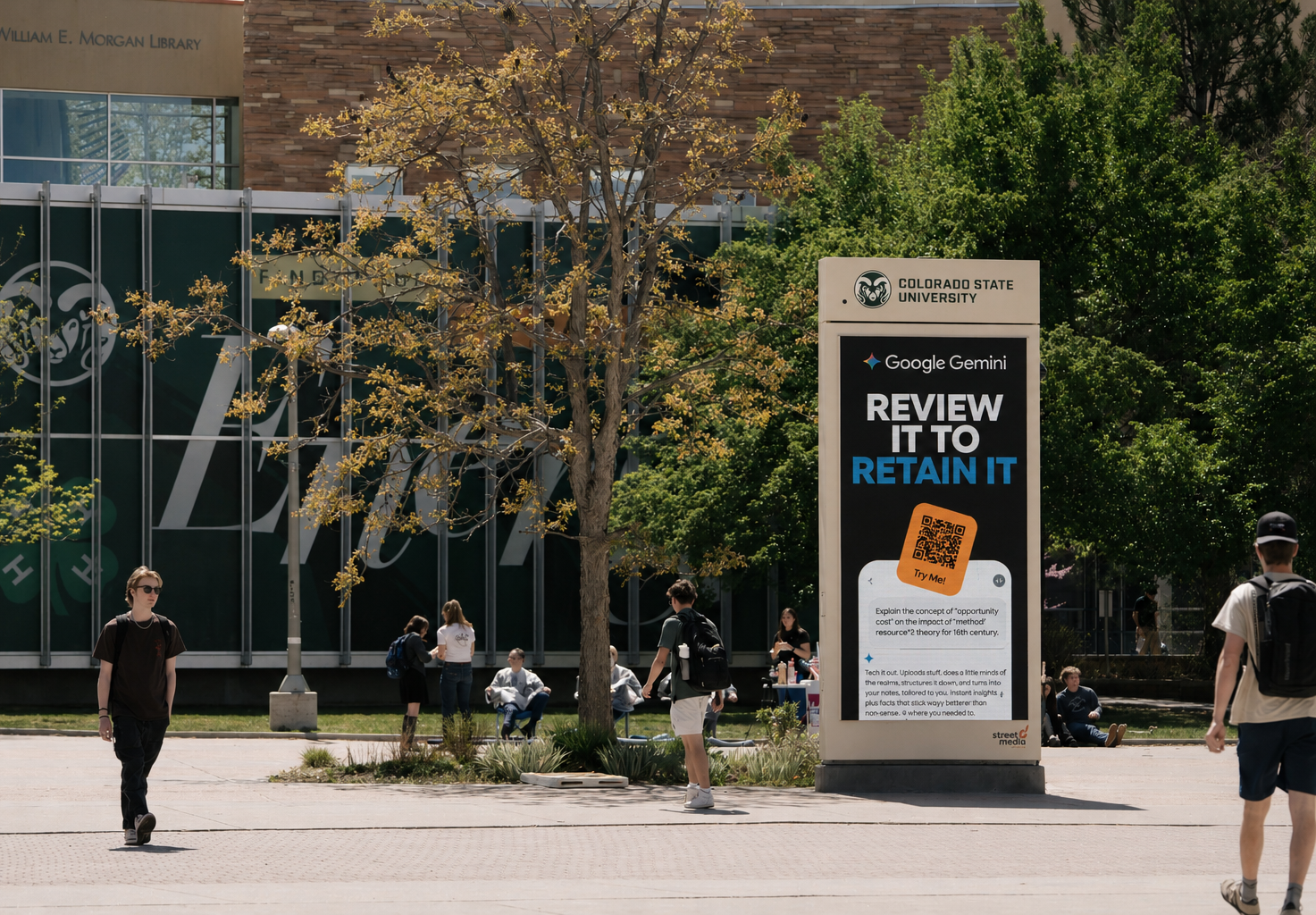
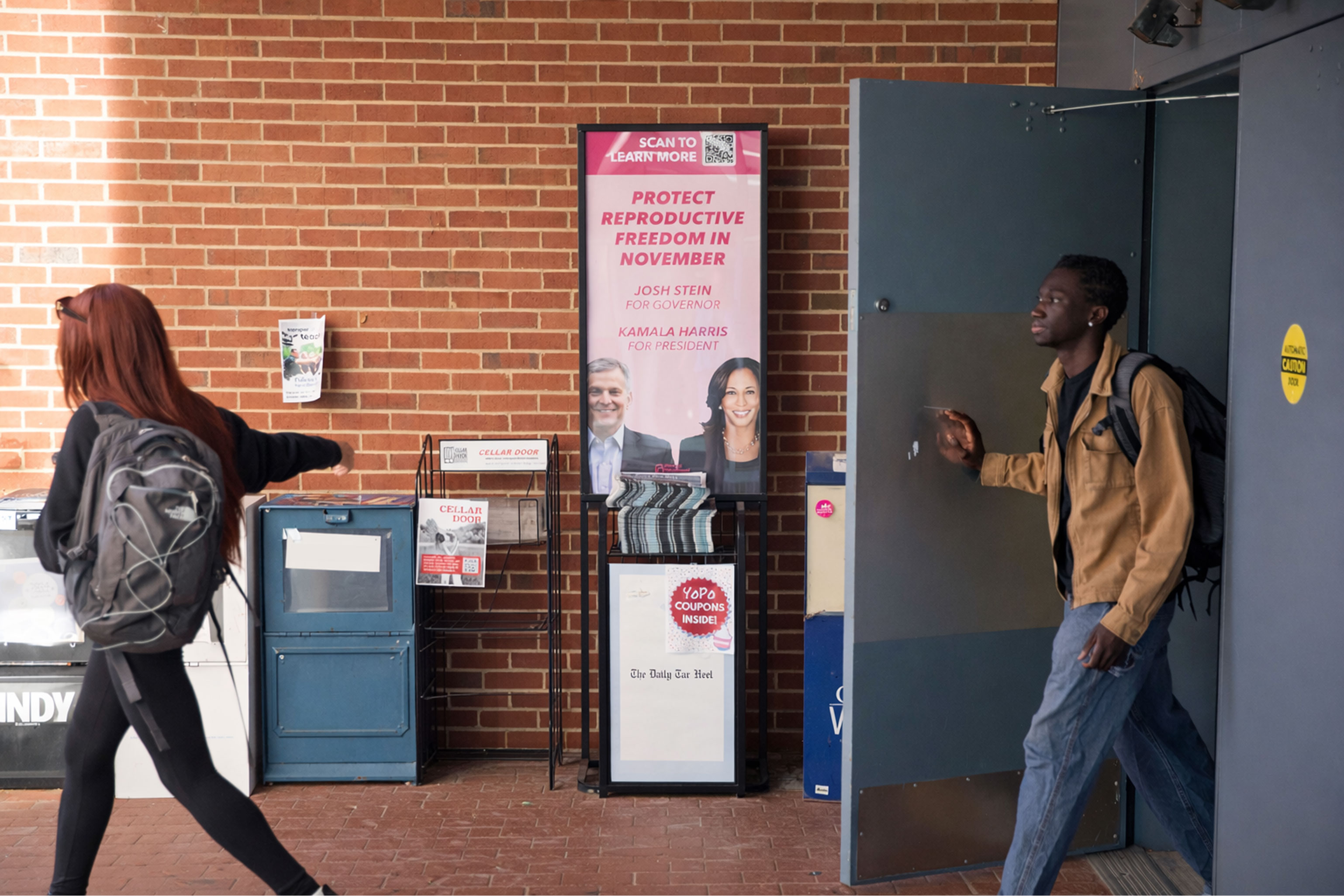
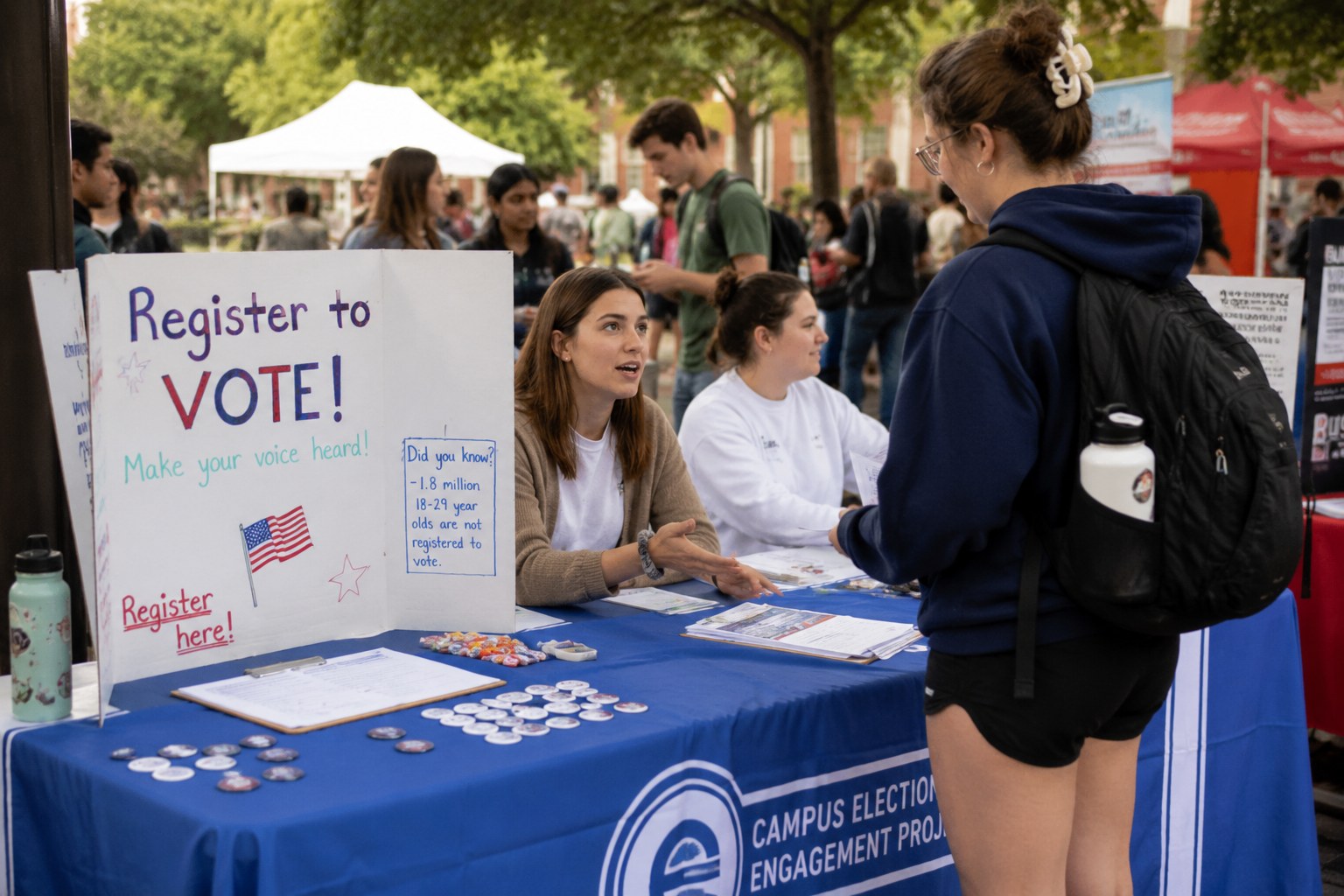
The campaign deployed media across multiple formats simultaneously: out-of-home placements (digital screens, posters, transit), campus newspapers, email newsletters, SMS, student influencers, and digital advertising. The goal was to make it difficult for a student to move through campus without encountering the message.
Campuses were designated as either exposed or control, enabling comparison across groups.
The program operated across seven battleground states: Arizona, Georgia, Michigan, North Carolina, Ohio, Pennsylvania, and Wisconsin.
flytedesk conducted surveys at both exposed and control campuses before the campaign launched (pre), during the campaign period (midstream), and after the election (post). Surveys were distributed through campus media channels, and respondents were incentivized via a gift card raffle. A post-election voter file match using Catalist data provided an independent check on self-reported behavior.
The program's primary objective was to increase the share of students registered at their campus address. It delivered.
Among all students at exposed campuses, on-campus registration rose 12pp after the campaign. Among out-of-state students specifically, the increase was 9.1pp. The share of students not registered at all dropped meaningfully as well, suggesting the campaign converted both unregistered students and some who shifted their registration location.
At control campuses, registration patterns were largely flat over the same period.
Exposed campuses saw a 4.8pp increase in students who correctly identified that they were eligible to vote from their campus address, compared to a 2.2pp increase at control campuses.
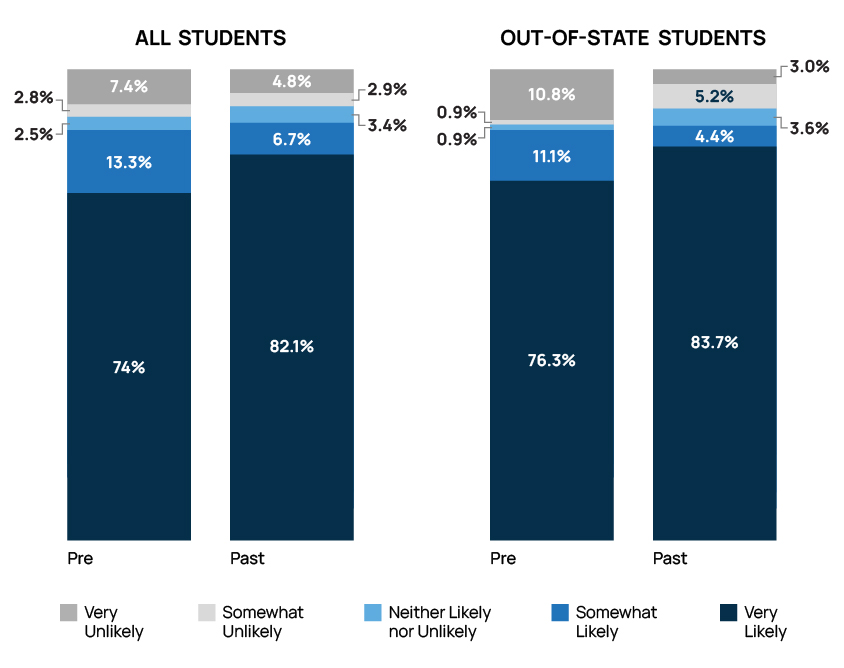
Among students at exposed campuses, the share reporting they were "very likely" to vote in the 2024 election increased by 7.1pp over the campaign period (from 74.0% to 81.1%). At control campuses, the same measure rose only 0.6pp over the same period.
Notably, the share of students who said they were "very unlikely" to vote dropped 2.6pp overall among exposed students, and 7.8pp among out-of-state students specifically. This suggests that the program was not simply reinforcing the already-engaged, but reaching and moving students who were ambivalent about participating.
A post-election survey of 382 students across battleground states found consistent differences between those who recalled seeing campus ads and those who did not.
Students who recalled ads were:
Among those who did vote, ad-recallers were more likely to report voting before Election Day, by mail or during early voting, a pattern consistent with a program that emphasized action and planning rather than last-minute mobilization.
One nuance worth noting: students who recalled ads reported being somewhat less excited about their vote choice than those who did not (70.5% somewhat or very excited vs. 78.2%). This likely reflects that the program successfully reached and mobilized students who were ambivalent rather than those who were already enthusiastic. It may also indicate that ad-exposed students included a higher share of marginal voters for whom the act of voting outpaced their enthusiasm for any particular candidate. Either interpretation is consistent with a program that expanded participation beyond the already-engaged base.
These findings should be treated as directional. Survey response bias likely affects both who completed the post-election survey and what they reported. That said, the direction and magnitude of the differences are consistent across every measured indicator.
The share of students at exposed campuses who agreed or strongly agreed that registering on campus meant their vote would count more increased 6.1pp over the campaign period compared to less than 1pp at control campuses.

Two findings stand out beyond the headline numbers. First, the 6-8pp shifts in the belief that campus registration makes a vote count more suggest the program did more than remind students of a rule; it changed how they thought about their own political relevance. Second, the drop in "very unlikely to vote" responses, especially the 7.8pp drop among out-of-state students, indicates the program engaged students who were not already on a path to participation. Reaching and moving ambivalent voters is a harder outcome to achieve than mobilizing the already-engaged, and it is where the program's impact is most consequential.
Omnichannel campus presence outperforms single-channel outreach. The program's use of simultaneous formats, across physical, digital, peer, and print, created the kind of repeated exposure that shifts behavior. No single channel produces the same effect in isolation.
Midstream measurement enables optimization. The midstream survey data confirmed the program was working within weeks of launch, allowing for real-time confidence in the investment and the ability to make tactical adjustments before Election Day.
Campus media, deployed with sufficient saturation and a clear behavioral ask, can meaningfully change where students register to vote, and in doing so, increase the probability that they participate in the elections that matter most to them.
The 2024 program demonstrated this across multiple measurement methodologies: pre/post surveys, ad recall analysis, and post-election voter behavior data all pointed in the same direction. The effects were largest for out-of-state students, the group with the most structural barriers to campus participation and the most to gain from removing them.
For organizations investing in student civic participation in battleground states, the case for campus-anchored, omnichannel programs is well-supported by the evidence.

On this page
Headings

.avif)

%202.svg)