.svg)
View all articles
Politics
In a 2018 matched-campus survey of 563 students, recall lift was concentrated on campus-specific channels while social media and television showed minimal difference between targeted and matched campuses.
Data collected and analyzed by BlueLabs and flytedesk.
May 5, 2026
Lorem ipsum dolor sit amet, consectetur adipiscing elit. Suspendisse varius enim in eros elementum tristique. Duis cursus, mi quis viverra ornare, eros dolor interdum nulla, ut commodo diam libero vitae erat. Aenean faucibus nibh et justo cursus id rutrum lorem imperdiet. Nunc ut sem vitae risus tristique posuere.

BlueLabs surveyed 563 college students during the 2018 midterm election cycle and found that 93% recalled seeing at least one political ad across any channel. But when comparing students on flytedesk-targeted campuses to those on match campuses, the lift in recall was not evenly distributed across channels.
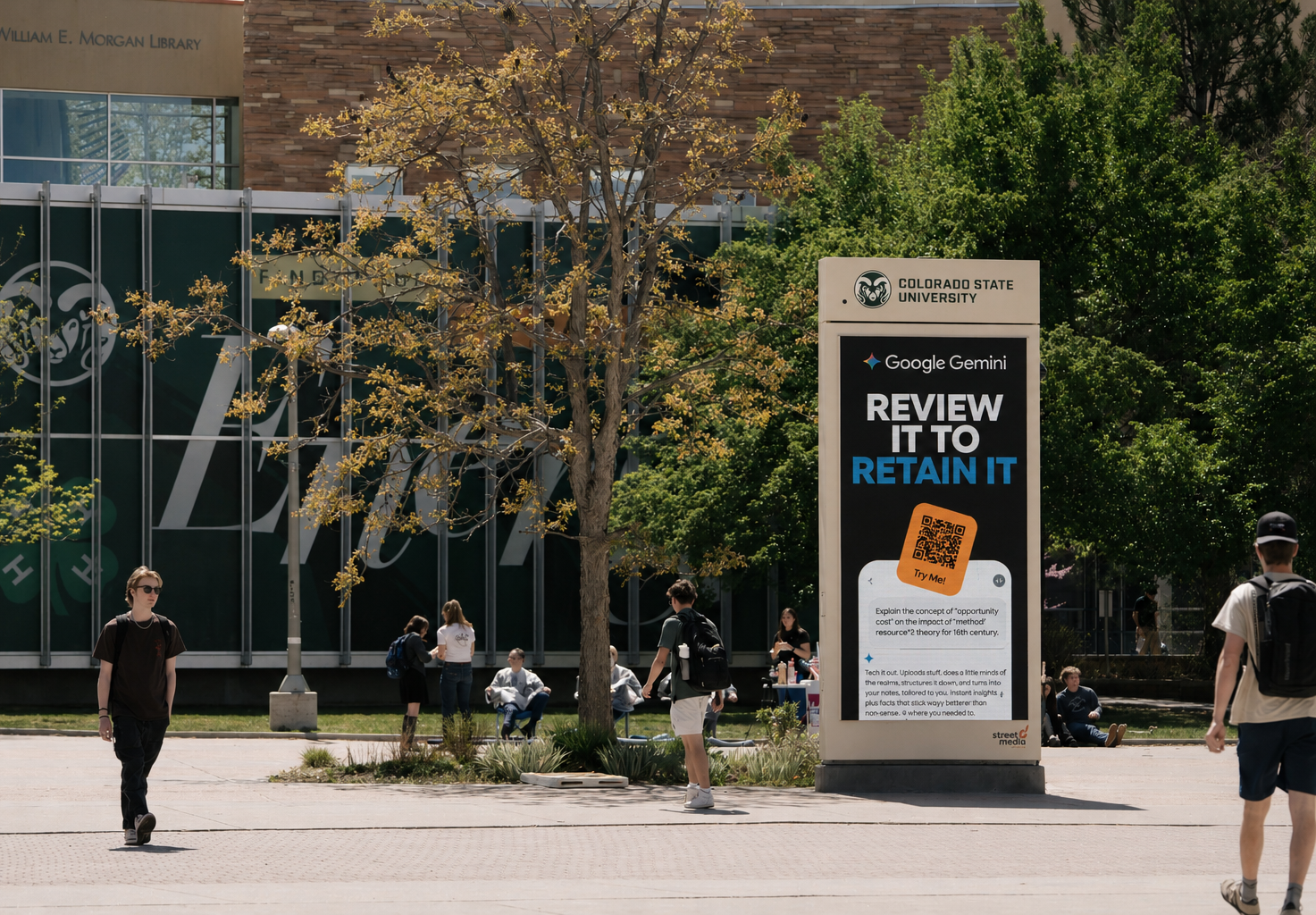
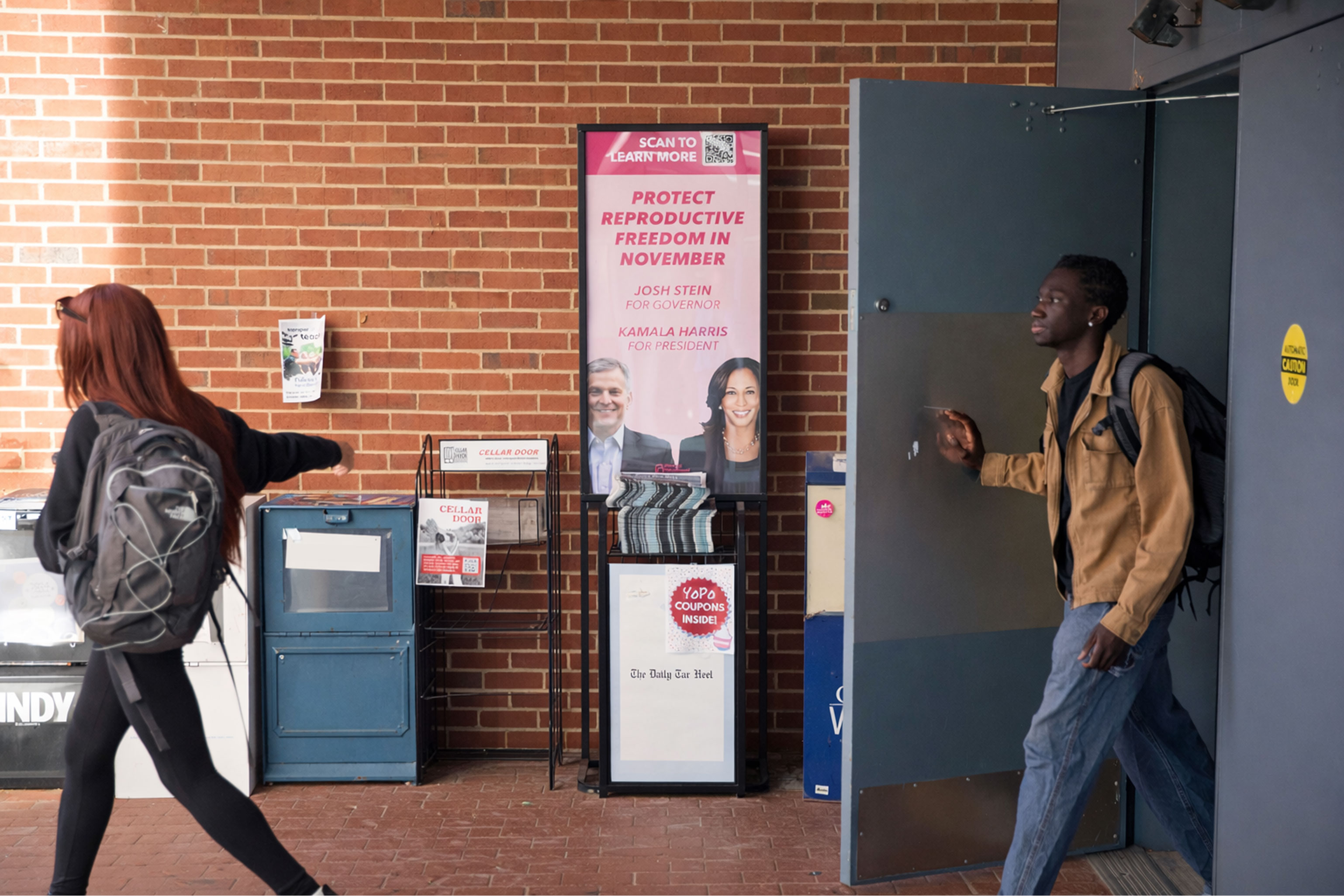
Campus-native formats showed the largest gains. Recall of signage on campus was 9 percentage points higher on targeted campuses. Student newspaper ad recall was 7 points higher. Branded coaster recall was 7 points higher. By contrast, social media recall was 2 points higher, and television recall showed minimal difference.

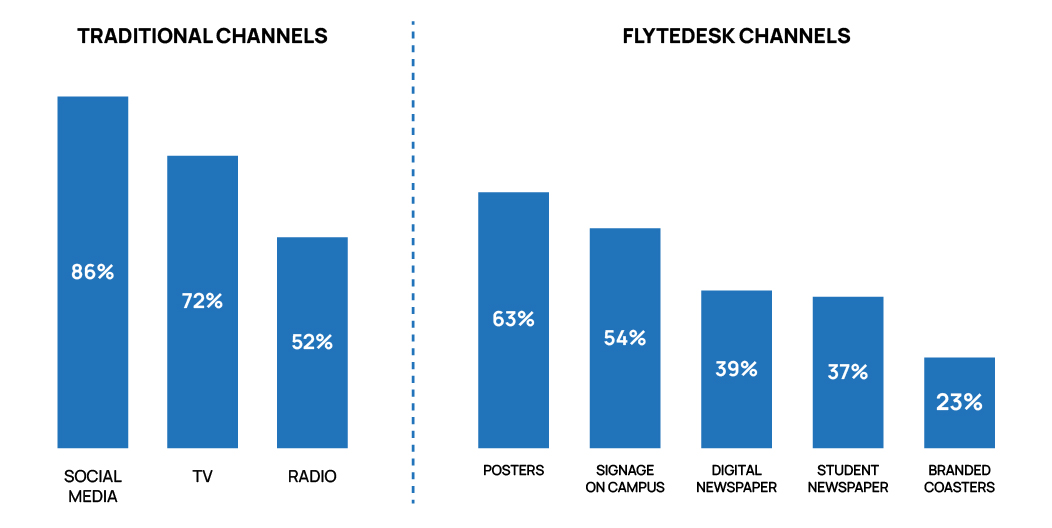
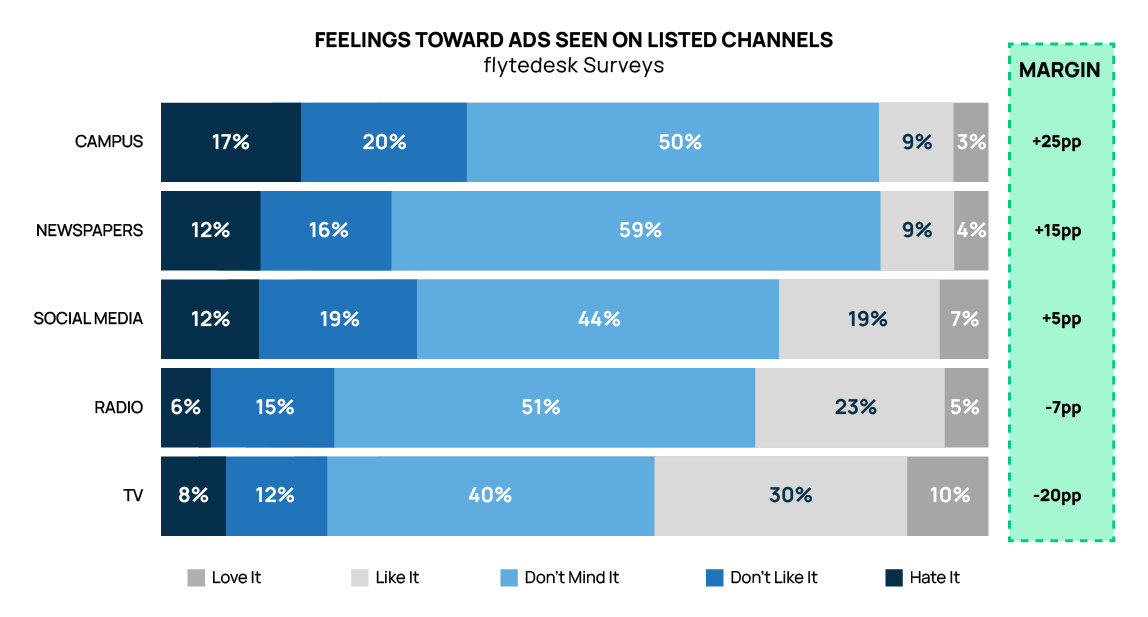
Sentiment data reinforced the recall data: when students were asked how they felt about political ads on different channels, campus and newspaper formats were the only ones where positive sentiment substantially outweighed negative sentiment. Students were net positive toward campus ads by 25 percentage points and toward student newspaper ads by 15 percentage points. Conversely, social media ads were net negative by 7, and radio and television ads were net negative by 20 points.
This sentiment gap matters for political advertising specifically. An ad that students actively dislike creates friction: despite generating recall, it cannot generate goodwill, and in some cases, it may even produce backlash. Campus-native formats appear to operate differently: they are encountered in a context students already trust, and they are associated with institutions (e.g., student newspapers) that carry their own credibility.
The higher recall lift for campus-native formats reflects a basic feature of how they work. Social media and television compete for attention within high-volume, algorithmically curated feeds where political ads are one of many stimuli. Campus formats occupy physical spaces that students move through in their daily routines, in environments with lower overall advertising noise, such as a poster in the dining hall, an ad in the student newspaper, a branded coaster at the campus bar. The lift in recall is concentrated precisely in the formats that are unique to the campus environment, not the formats that can be bought anywhere. It is simply present in a space where students already are.
Survey data from BlueLabs, conducted October 16 through November 3, 2018, with 563 student respondents matched to the voter file. Sentiment data from flytedesk surveys administered across targeted campuses during the 2018 cycle. Findings should be considered directional given the matched-campus design.

On this page
Headings

.avif)

%202.svg)